
A smooth international move starts with one thing: a solid moving overseas checklist built well before your shipping date. That single step keeps everything else on track.
Unfortunately, most people skip it. They rush through packing their household goods and forget about compliance paperwork. Then customs holds your shipment, and the delays just snowball from there.
A good plan, on the other hand, factors in container shipping timelines, documentation and final delivery at your destination. We’ll walk you through all of it in this article, plus a practical checklist you can start using straight away.
Container Ship Logistics and the Reality Behind International Relocation Timing
Most international moves travel by sea, and the whole process takes anywhere from 4 to 12 weeks. That timeline depends on your route, the carrier’s schedule and conditions at each port along the way.
So let’s break down the stages.
Why Container Shipping Runs Every International Move
Sea freight is the most cost-effective way to move household goods across countries, which is why the majority of international relocations rely on it. For context, a 20ft container comfortably fits a one to two-bedroom home. But larger households (say three bedrooms or more) usually need a 40ft container.
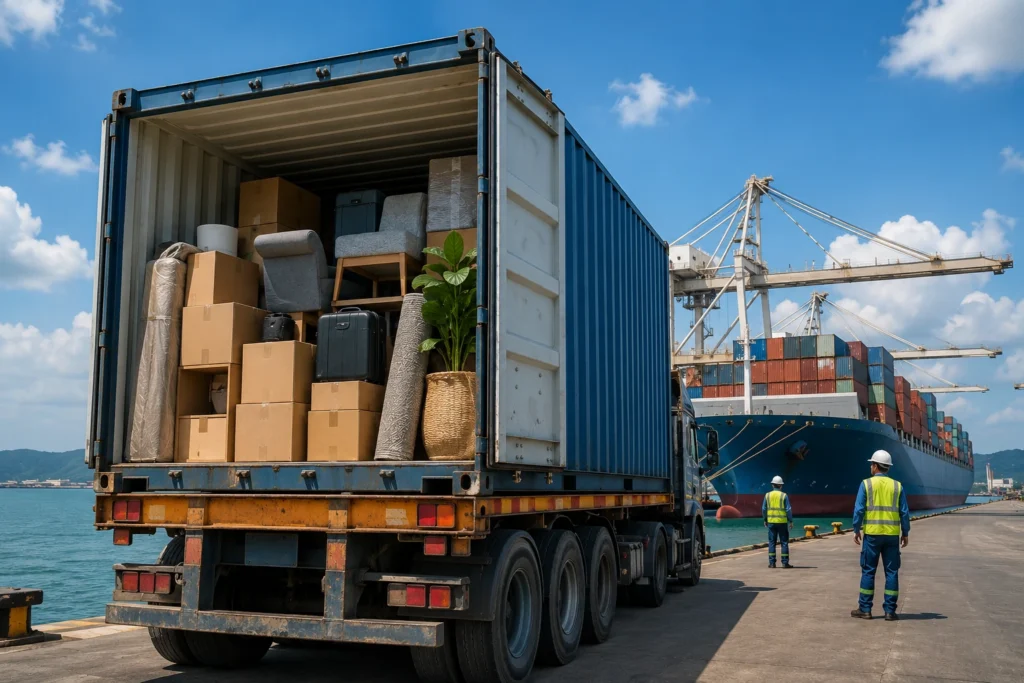
Now, if you don’t have enough belongings to fill a full container, there’s another option. LCL, or less than container load, lets you share space on a container with other shipments. You’ll only pay for the cubic metres you actually use, which brings the cost down significantly.
Whichever option you choose, the process follows the same path. The moving team loads your cargo, seals it with a tamper-proof tag, and hands it to the carrier for transit to your destination.
What Happens to Your Shipment From Port to Port
Your container passes through several stages before it shows up at your new front door. Each one involves different teams and timelines, so take a look at what you can expect at every point:
- Packing and Sealing: Professional movers load your household goods into the container at your home or a local depot. Once the movers secure everything, they place a unique security seal on the container. That seal stays intact until customs inspects it at the other end.
- Port Transfer: From there, a transport crew moves the sealed container to the departure port by truck or rail. Officials process your customs documentation and export paperwork at this stage. You need to sort everything before the vessel departs.
- Vessel Loading: At the port, crews load your container onto the cargo vessel alongside hundreds of others. Note that a day or two of waiting here is completely normal since the timing depends on the carrier’s schedule and how much deck space is available.
- Sea Freight Transit: The vessel then follows its assigned shipping route, and it may stop at several ports along the way to pick up or drop off other cargo. For a move from Australia to Europe, this leg alone can take 10 to 12 weeks. Shorter routes, like Australia to Southeast Asia, usually wrap up in 4 to 6 weeks.
- Discharge Port Arrival: Once your container reaches the discharge port in your destination country, customs clearance begins. Officials may inspect the shipment before giving the green light for final delivery to your new address.
Surprisingly, most delays happen before the vessel even leaves. It’s usually due to missing paperwork and last-minute packing changes that hold up the shipping process and delay your departure schedule.
Common Reasons Shipments Get Delayed
Delays often come from poor preparation rather than the shipping company itself.
Vessel scheduling changes are one of the most common. As mentioned earlier, carriers regularly adjust departure dates and routes based on cargo demand. So your original sailing date can change by a week or more without much notice.
Another frequent issue is port congestion, particularly at busy hubs across Europe, Southeast Asia and the Middle East, where high traffic volumes slow everything down.
Your container might also pass through two or three transit ports before reaching the discharge port. If delays occur at any of those ports, they can affect the rest of your delivery schedule.
Customs Clearance and Household Goods: Where Most International Moves Get Stuck
Customs clearance is the stage where most international moves hit a wall. Incomplete paperwork or missed compliance steps can hold your entire shipment at the discharge port for weeks.
The good part is that nearly all of these holdups are preventable. Here’s what you need to get right.
What Customs Clearance Actually Involves
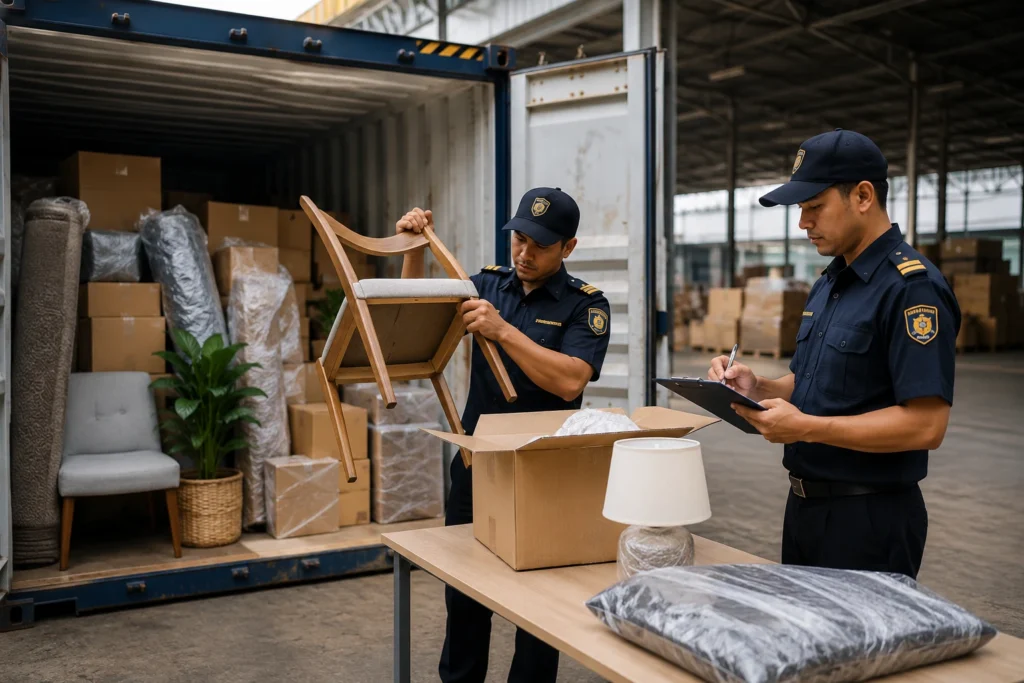
Every country has its own rules for imported household goods, which means your shipment will usually go through a customs inspection before customs releases it. During this process, officials review your paperwork, inspect the contents of the shipment, and confirm that everything matches the declared information.
Some countries enforce these rules more strictly than others. For example, Australia has some of the world’s strictest biosecurity requirements. Authorities don’t allow items containing soil, bark, food, or plant material into the country, so you need to clean your belongings carefully before shipping them.
Otherwise, customs officials may hold your shipment at the port while they carry out additional checks.
Documents You’ll Need Ready Before Shipping
Sorting your paperwork early is one of the easiest ways to avoid delays at customs. Most countries ask for the same core set of documents, so these are what you need before your shipping date:
- Detailed Inventory List: Start with a full list of every item in your shipment, including clear descriptions and estimated values. Vague entries like “box of misc stuff” almost always get flagged, and that alone can slow your clearance down by days.
- Identity and Visa Proof: Your passport, visa or residency permit, and proof of address at your destination all need to be current and accurate. You should also check your passport’s expiry date. Many countries require at least six months of passport validity after your planned stay before they will release your shipment.
- Import Declaration Forms: Most destinations also require a formal import declaration before your household goods arrive. These forms confirm exactly what you’re bringing in and verify that you’ve met the country’s compliance rules.
- Restricted Items Compliance: Some belongings need extra permits or certificates, and medications are one of the most common examples. Here, you’ll usually need a letter from your prescribing doctor, along with approval from the destination country’s health authority.
Even one missing document from this list can stall everything at the discharge port. That’s why we always recommend starting at least ten weeks before your shipping date, so nothing catches you off guard.
Why Paperwork Problems Cause the Longest Delays
Over 75% of customs-related complaints trace back to documentation issues rather than the shipping company. Incomplete forms top the list, and incorrect item valuations come in as a close second.
Missing government approvals add to the problem as well. Some countries require pre-arrival permits for certain goods. So if you don’t lodge them in time, authorities may hold your shipment until they receive the required documentation.
What Happens When Your Shipment Gets Held at Port
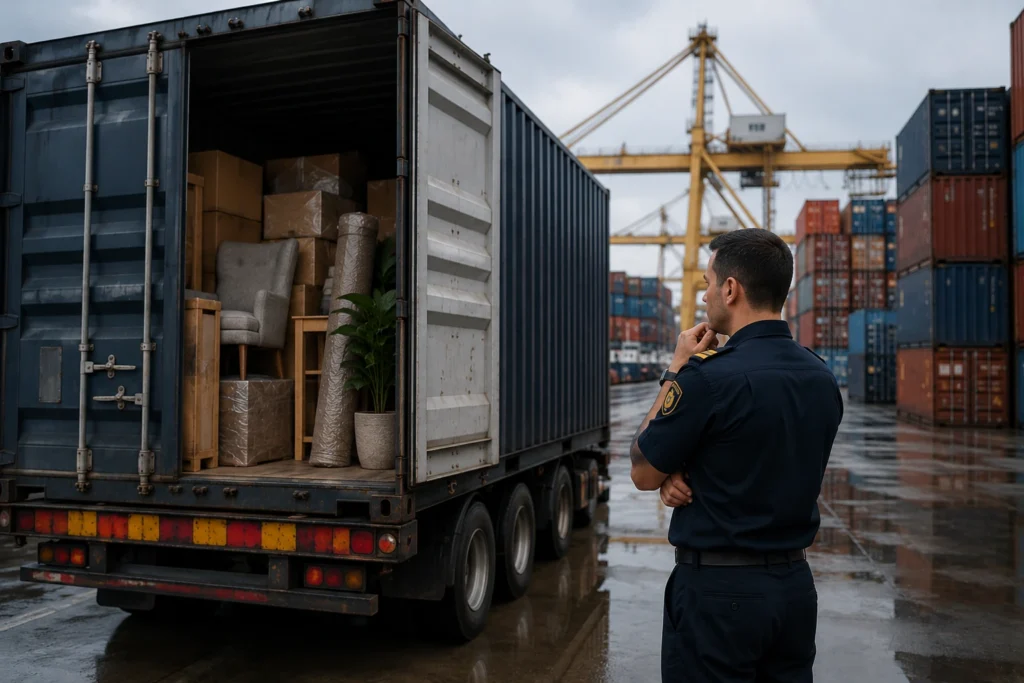
As we mentioned, if you don’t have the required paperwork ready when your container arrives, port authorities may place your shipment on hold until they receive the missing documents. During this time, they may move it into bonded storage, where storage fees can start accumulating each day.
Busy ports only make the situation worse. High cargo volumes create clearance backlogs, which means even properly documented shipments can end up waiting days for processing.
During peak seasons, some ports across Europe and Southeast Asia see those backlogs stretch out to a week or more. This is usually during the pre-Christmas shipping rush and the Chinese New Year.
Fortunately, if you involve your customs broker early and check every document before shipping, you can reduce the risk of problems later in the process.
Final Delivery, Delays, and What Makes an Overseas Move Feel Smooth
Once customs clearance is done, your shipment will move into the final delivery stage. A local transport crew will pick up your container and bring your household goods to your new home, where movers unload and place everything for you.
That said, timing still needs to line up. If your accommodation isn’t ready yet, you may need short-term storage, and that adds extra cost. Having a confirmed move-in date before your container arrives helps avoid this entirely.
In the end, successful international moves often come down to two things:
- Detailed moving overseas checklist
- Clear communication with your relocation team
Get both right, and you’ll stay organised and avoid unnecessary problems along the way.
Ready to start planning? Visit Run Away Squirrels for step-by-step guidance on moving abroad.