
Your home should be the place where you switch off. But for most people, it’s just another screen environment. The phone sits on the bench, the laptop ends up on the bed, and the TV runs in the background. All of this builds up almost without you noticing.
This guide looks at what changes when you pull back on devices at home. Just small, deliberate shifts that your brain actually responds to without any effort. This one’s about reclaiming your space, one room at a time.
What Does a Digital Detox Home Look Like?
A digital detox home limits screen use to specific times of day or designated rooms, such as keeping the bedroom for rest and the dining table for eating. Once digital devices start filling every room without any boundaries, those spaces stop doing their job. Your brain loses its ability to wind down properly, too.
Fortunately, it doesn’t take a big overhaul to get there. A phone basket near the front door, or a no-screens rule after a set hour, is a good starting point. The idea is consistency rather than perfection.
How Screen Time Chips Away at Your Mental Health
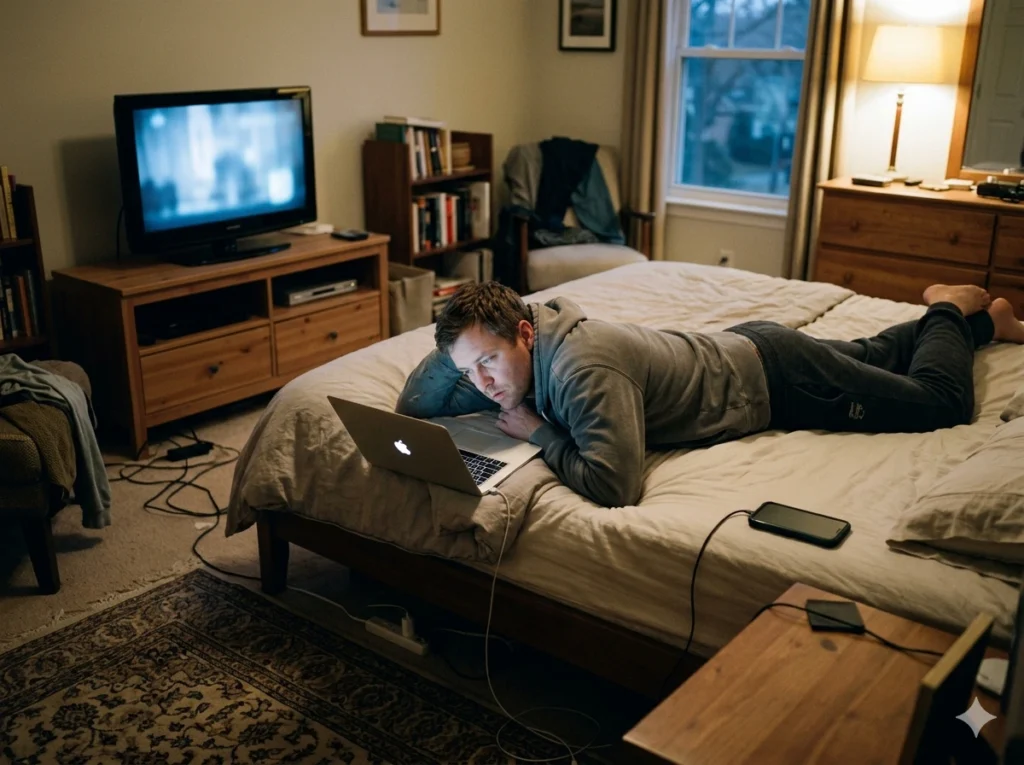
Stress is easy to blame on work or poor sleep. Screen habits rarely make that list, but they probably should.
The average Australian spends over 6 hours a day on screens, and a good chunk of those hours happens at home, during the times your brain most needs to decompress. Some researchers even compare heavy social media use to other drugs, given the way it keeps pulling you back for another hit.
Let’s check the connection between screen habits and stress:
The Link Between Electronic Devices and Chronic Stress
Every notification your phone sends is a small alert to your nervous system. Electronic devices actively hold your attention, and social media platforms do this especially well. That constant screen use builds low-grade stress that most people don’t clock until it starts affecting their mental health.
When Your Brain Stops Getting a Break
Without screen-free gaps, your brain never fully powers down. Cognitive load stays high from the moment you wake up, which is why you can spend a whole day at a computer and still feel mentally drained by evening. That ongoing strain affects both focus and mood. Even a short daily break from screens can significantly improve both
Cutting back on screen time is about giving your brain the conditions it needs to rest. Most people notice a difference within a few days of making even small changes to their daily habits.
Device-Free Bedroom: Does It Improve Sleep?
Yes, and by quite a bit. Keeping screens out of the bedroom is one of the most impactful changes you can make for your sleep quality. The bedroom should signal rest to your brain, but screens send the opposite message.
The effects show up in two clear ways: how devices strain your body at night, and how small changes in your bedroom can improve sleep quality.
Eye Strain, Late-Night Scrolling, and What They Cost You
Staring at a bright screen in a dark room puts strain on your eyes. This happens because blue light from your phone or computer suppresses melatonin (the hormone that signals sleep). Adults need seven or more hours of quality rest each night, and late-night scrolling slowly chips away at that across the week.
Small Bedroom Changes That Improve Sleep Fast
Swapping your phone alarm for a physical alarm clock removes the main excuse for keeping your device in the room at night. At the same time, keeping a book or journal on your bedside table gives your hands something else to reach for. Also, dim the lights an hour before bed, and your body’s natural sleep rhythm will follow.
These don’t have to happen all at once. Just pick one change this week and let it settle before adding another. Small, consistent shifts in your bedroom environment lead to noticeably better sleep quality over time.
Screen-Free Zones: Which Rooms Benefit Most?
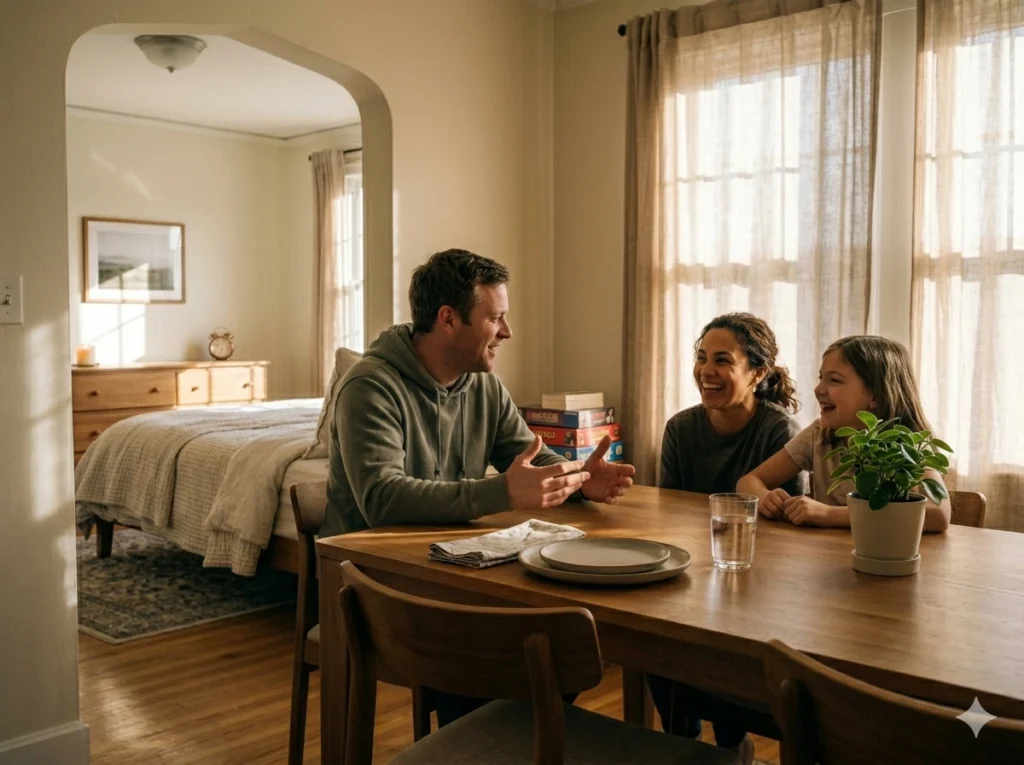
A couple of rooms are worth protecting, and the difference shows up gradually without banning screens from your entire home. Setting device-free zones also makes it easier to set time limits for the whole family, including older children who spend a lot of free time on their phones.
Start with these four rooms and work from there:
- Bedroom: As we already mentioned, sleep quality improves quickly once screens stay out. Your brain starts linking the room with rest again, which is exactly what it needs.
- Dining Room: Meals without phones or a laptop on the table bring real conversation back. Families who set boundaries here often notice the shift within a week.
- Kids’ Playroom: Children focus better and engage in more creative play when devices aren’t the default option. Age-appropriate games and activities naturally fill that space.
- Living Room Corner: One device-free corner gives everyone a mental reset spot. It’s a low-effort way to reduce stress and encourage face-to-face time with friends and family.
Parental controls can help manage screen time limits for older children across the rest of the house. But these four are the ones worth starting with.
Can You Improve Concentration Without an App?
Fixing your focus through a screen-free zone is free and works straight away. Removing non-essential notifications from your phone and computer could be the first step. Every ping your device sends pulls your brain out of whatever it was doing, and getting back on track after that takes longer.
Screen-free work periods help you stay focused for longer stretches. Your brain concentrates better when it isn’t sitting there waiting for the next alert. A clear desk, a silenced phone, and a closed browser tab go a long way toward better concentration without downloading a single thing.
Screen-Free Activities That Don’t Feel Like a Punishment

“Screen-free time” sounds like something your parents threatened you with as a kid. Done right, though, it’s something you’ll find yourself looking forward to. The trick is to pick screen-free activities that don’t feel like a chore. And there are plenty of good ones.
Give some of these a go and see what sticks:
- Reading: Even 20 minutes of reading before bed improves focus and winds the brain down far better than scrolling. Children who read daily also tend to perform better at school.
- Physical Activity: Getting the body moving is one of the fastest ways to improve focus and clear your head. And honestly, a walk, a swim, or some aerobic exercise does more for your mental state than an hour of sitting in front of screens.
- Playing Games: Board games, card games, and outdoor games with friends or family bring conversation back into your free time. They’re also a lot of fun and a great way to spend a few hours each week without a phone in hand.
- Creative Hobbies: Cooking, sketching, gardening, or playing an instrument all pull your full attention in a way that devices rarely do. These kinds of activities rebuild the concentration that too much screen time tends to wear down.
Pick one or two that fit your lifestyle and spend a week giving them a proper go. Most people are surprised by how quickly the pull of their phone fades once something else fills that space.
How Changing Your Digital Habits Keeps You in the Present Moment
One of the less obvious wins of cutting back on devices is how much more you notice what’s already around you. A person who isn’t reaching for their phone every few minutes is more present in conversations, their meals, and their surroundings.
Digital habits are hard to shift at first, and that’s completely normal. Simple changes like leaving your phone in another room during dinner or setting limits on certain apps build positive effects throughout the week. Your family notices, your friends notice, and honestly, so do you.
Technology isn’t going anywhere, and nobody’s suggesting it should. The goal is to give the present moment a fair shot, and your full attention, at least some of the time.
Cognitive Training or Just Good Rest? What Removing Devices Does to Your Brain
Most people think rest means doing nothing, but screen-free rest and screen-heavy rest affect your brain in very different ways. Various aspects of cognitive function, including processing speed and attention, respond well to regular breaks from technology.

Four things start changing once device-free time becomes a regular part of your week:
- Stronger Focus: Regular screen-free periods improve attention span and help you stay focused for longer. Children and adults both benefit, though the effects are prominent in younger brains.
- Better Processing Speed: Your brain handles information faster when it gets proper rest. Too much screen time, on the other hand, keeps cognitive function lower than it should be, like a computer with too many tabs open.
- Improved Creativity: Device-free time lets your brain wander, which is when a lot of its best thinking happens. Giving it room to roam without digital devices tends to produce better ideas.
- Less Mental Fatigue: When you step away from screens, you reduce the constant stream of visual and mental input. Over time, this break helps your mind reset and return with better clarity and energy.
Regular device-free periods won’t replace sleep or physical activity, but they do improve attention and support better cognitive function over time. Think of it as low-effort upkeep for your brain.
Ready to Reclaim Your Space? Run Away Squirrels Can Help
A digital detox gives your everyday life some breathing room. Adjusting digital habits, such as setting social media limits or choosing to fall asleep without a phone nearby, creates noticeable improvements across the week.
Here are a few tips to get started:
- Set boundaries around screen use in at least two rooms this week
- Spend one hour each evening on screen-free activities
- Control how much time children spend on digital devices each day
- Try a full digital detox one day per week and notice how different your day feels
Run Away Squirrels covers practical lifestyle guidance for expats and anyone building a better everyday life abroad. If this was useful, there’s plenty more on the blog worth a look.