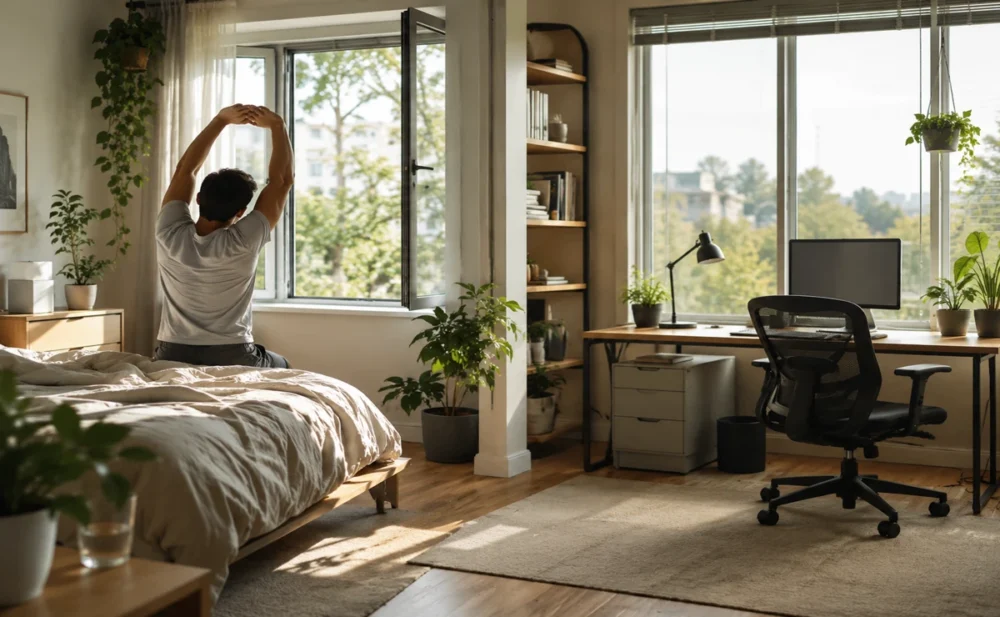
Your surroundings affect the way you feel every single day. The room you wake up in, the commute you sit through, the office you spend eight hours in, all of it feeds directly into your mental health in ways that rarely get talked about.
A room’s appearance is only one part of the picture. Noise levels, lighting, air quality, and even the tidiness of your space can influence mood and stress levels.
This article walks you through exactly how your environment affects your mental state, and what you can practically do about it.
Environment and Mood: What’s Going On?

Your brain is constantly picking up on the world around you. Colours, sounds, smells, and temperature all influence how you feel without you noticing.
In fact, research shows that the environments we spend the most time in have a direct effect on stress, anxiety and overall mood. As a result, a noisy, chaotic space keeps your nervous system on edge. A calm, organised one does the opposite.
The link between environment and mood is widely recognised, and honestly, once you see it, you cannot unsee it.
Environmental Factors That Affect Mental Health
Your environment does not affect everyone the same way, but three spaces that consistently show up in the research. Take a look at how each one plays:
Home Atmosphere and Mental Wellbeing
Getting your home right is one of the most practical steps you can take for your mental well-being. The fact is, a cluttered, disorganised space raises cortisol levels and makes it hard to switch off.
In contrast, familiar objects, warm lighting, and tidy rooms help create a calmer headspace, making it easier to relax, stay focused, and feel more comfortable in your day-to-day environment.
Work Environment and Mental Health
You spend roughly a third of your life at work, so it is worth asking what that environment is doing to your physical and mental health. Noisy, poorly lit offices drain mental energy fast. That’s why a lack of control over your workspace is often directly linked to higher burnout and lower job satisfaction.
Social Environment and Mental Health
Positive relationships and strong social support act as a buffer against anxiety and depression. Toxic social settings, on the other hand, create chronic low-grade stress that gradually wears down your well-being. For example, regularly spending time with people who are overly critical or constantly negative can leave you feeling anxious, drained, and emotionally exhausted over time.
Although all of their effects vary, these spaces play an important role in supporting or undermining mental health.
Noise, Light and Air Quality: The Hidden Mood Wreckers
Fixing these three things-sleep Quality, natural light, and air quality in your immediate environment can produce noticeable improvements in mood and mental clarity. Most people overlook them completely, yet the research on each one is pretty hard to ignore.
Here’s what the evidence actually shows:
- Noise and Sleep Quality: Chronic noise exposure raises stress hormones and disrupts sleep quality (two things your mental health genuinely depends on). Research links long-term traffic noise exposure to a higher risk of depression and anxiety, with further studies connecting road noise directly to sleep disturbances.
- Natural Light and Mood: Insufficient natural light suppresses serotonin production, which directly affects mood and energy throughout the day. Public health data consistently relate light exposure and its impacts on mental health. Even blue light can affect your sleep.
- Air Quality and Mental Health: Poor indoor air quality is linked to fatigue, brain fog and increased anxiety symptoms. The Australian government has flagged air quality as a public health concern, noting its broader effects on both mental and physical health across communities.
Small changes to noise, light and air quality in your immediate space can meaningfully shift how you feel day to day. These are adjustments and renovations you can make this week.
Does Clutter Really Affect Mental Health?

Yes, and the research backs it up. A study in the Journal of Environmental Psychology found that higher levels of home clutter are directly linked to lower well-being, more negative emotions and reduced life satisfaction. This visual clutter competes for your attention and creates a low-level mental load that exhausts you throughout the day.
Decluttering is a practical, low-cost step toward better mental health that most people never give a second thought. Your brain processes everything in your visual field, and a cleaner space genuinely gives it less to fight against.
Weather, Climate and Long-Term Exposure
A bad day of weather is one thing, but prolonged exposure to difficult environments is a different conversation altogether. The following areas show some of the most common ways your surroundings can shape your mental well-being.
What Long-Term Exposure to Poor Environments Can Do
As we already mentioned, long-term exposure to noise, pollution and overcrowding is linked to chronic anxiety, depression and a higher risk of mental illness. The effects build up gradually, and most people never connect their mood to their environment until the damage is well and truly set in.
How Perception Shapes Your Mental State
Two people can walk into the same room and feel completely differently about it. Your past experiences and expectations guide how your brain interprets the spaces around you, and that directly affects your mental well-being.
In the long run, the environments you spend time in influence how you think, feel, and recover each day. For travellers seeking a reset and a deeper perspective, sometimes the best step is to change the setting entirely.
Lifestyle Improvement Tips: Environmental Changes Worth Making
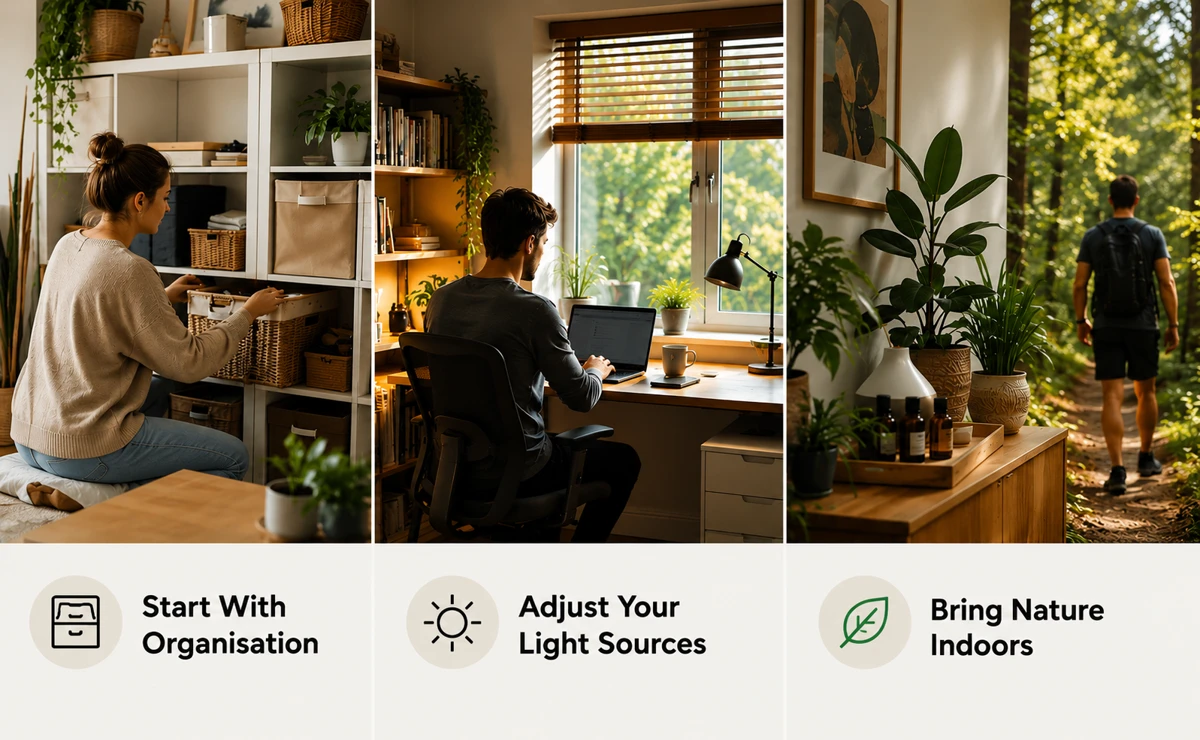
Most environmental changes cost little to nothing and can realistically be acted on today.
Below are some practical starting points:
- Start With Organisation: Physical clutter gives your brain more to process than it lets on. When surfaces, cupboards and everyday items have a clear place, your home feels easier to navigate and less mentally demanding. Clearing your space is one of the most affordable ways to reduce stress and improve mood at home.
- Adjust Your Light Sources: Natural light plays a major role in regulating your body’s internal clock. A brighter workspace during the day can support focus and energy levels, while warm-toned bulbs in the evening encourage relaxation and better sleep. Even a small change, such as moving your desk closer to a window, can help create a healthier daily rhythm.
- Bring Nature Indoors: Research consistently links exposure to nature with better mental health and lower stress levels. Plants, natural textures, and calming scents contribute to a greater sense of calm and control at home. Doing physical activity in nature can improve mental health.
Together, these small touches can help create a greater sense of calm and control at home. The benefits to your well-being are real, and most of them are within reach without spending a cent.
When Environmental Changes Aren’t Enough
Sometimes, a better-organised space and more natural light simply is not enough, and that is completely okay to admit. The next step is recognising when something more may be going on
Signs You Need More Than a Tidy-Up
Improving your environment can make a meaningful difference to your mood, but it is not a cure. Low mood, anxiety or fatigue that persists despite environmental changes is worth paying attention to. Mental health challenges are often influenced by a combination of factors, not just your surroundings.
Pay particular attention if these feelings begin to interfere with daily life. Withdrawing from family and friends, ongoing sleep disturbances, and Suicidal thoughts or hopelessness are all signs to act on.
Mental Health Support and Health Professionals
If environmental changes have not shifted things, speaking with a health professional is the logical next step. In Australia, mental health support options range from GP referrals to community-based wellbeing programmes, many of which are low-cost or free. Getting the right support early leads to better outcomes across the board.
Your Space, Your Headspace: Take It Seriously
The link between environment and mood is well-established, and it is well within your control to act on. As we mentioned, small, consistent environmental changes add up over time, and the benefits to your mental health and well-being are very real.
You do not need a complete home overhaul to see progress. Better natural light, less clutter and stronger social support can shift your baseline mood.
At Run Away Squirrels, we cover the lifestyle topics that help you build a life that works for you. Browse our latest articles and take the first step toward a space worth living in.
FAQs: Better Mental Health and Your Environment
People are often surprised by how much their daily environment shapes the way they feel. These are the questions that come up most often.
Can Your Environment Cause Anxiety or Depression?
Yes. Environmental factors like chronic noise, poor air quality and social isolation can directly contribute to anxiety and depression over time. Short-term exposure may cause temporary mood shifts, but prolonged exposure raises the risk of developing a genuine mental illness.
What Is the Fastest Environmental Change You Can Make to Improve Your Mood?
Tidying your immediate space is the first step most health professionals recommend. Messy environments create mental load fast, and clearing them gives your brain room to settle. It is free, takes under an hour, and these are noticeable improvements.
How Does the Australian Government Support Mental Well-Being at a Community Level?
The Australian government funds a range of public health programmes focused on positive mental health and community well-being. Resources like Beyond Blue and Head to Health provide free access to mental health support, information and referral pathways.