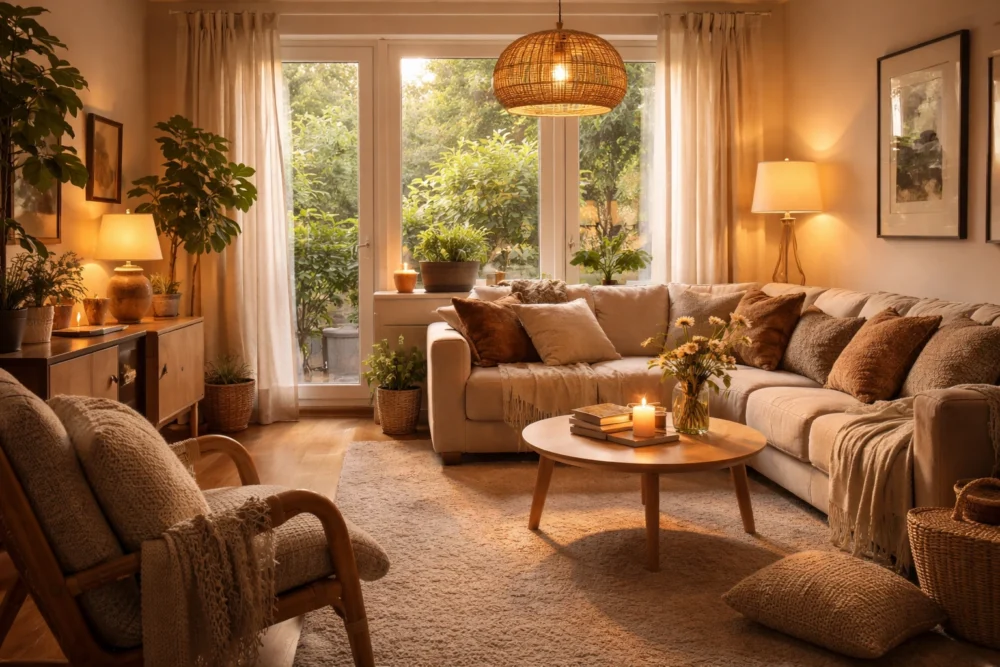
Small home changes create big emotional shifts in unexpected ways. Simple tweaks to lighting, textures, and room flow can completely change your mood. But it doesn’t stop there.
If you want to know how a few tiny adjustments can reduce anxiety and boost your emotional well-being, you’re in the right place. We’ll show you which home improvement tips work without major renovations or huge budgets.
If you don’t want to keep feeling drained by your own space, stay with us. We’ll cover:
- How natural materials and indoor plants lower stress hormones
- Light quality’s surprising effect on sleep patterns
- Storage solutions that create mental breathing room
- The impact room layouts have on family connections
Let’s get into it.
What Are Home Improvement Tips for Better Mental Health?
The best home improvement tips for mental health focus on natural materials, proper lighting, and indoor plants. These three areas work together to reduce stress and improve how you feel in your space.
Here’s how each one helps.
Natural Materials Create Calming Spaces
Timber, wool, and cotton offer comfort and create immediate positive responses when you touch them. Why? Their breathable characteristics prevent moisture buildup that disrupts sleep cycles.
Plus, organic textures reduce the overall visual noise in your rooms (and yes, your synthetic pillowcase might be part of the problem).
Light Quality Affects Daily Mood
Blue light from overhead fixtures increases alertness but disrupts evening relaxation. On the flip side, warm-toned bulbs promote serotonin production in the mornings while supporting melatonin release after sunset.
We recommend you get adjustable lighting. These lights allow you to control the room’s atmosphere and match light intensity to your energy needs.
Plant Placement Reduces Stress Levels
Research shows caring for houseplants lowers heart rate significantly to create immediate relaxation. What’s more, green elements improve air quality. Houseplants also provide visual breaks that reduce eye strain and mental fatigue.
Once you understand these basics, clearing your clutter becomes the next natural step.
Decluttering Creates Mental Space
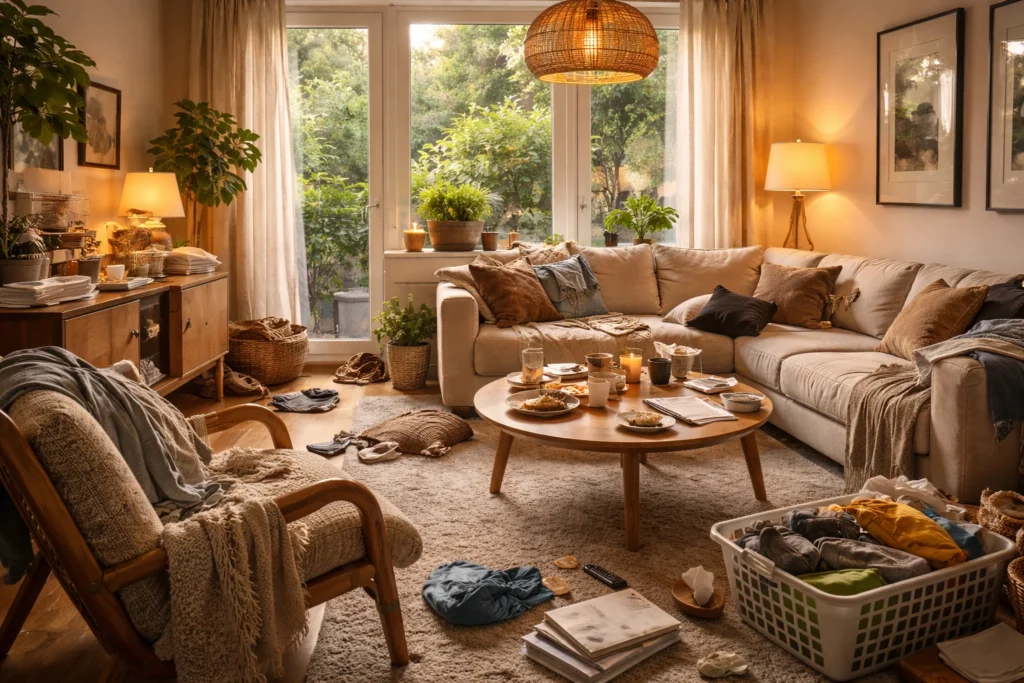
Decluttering doesn’t cost a thing to boost your mental health. So you should just remove what’s draining your energy and watch your mood lift.
Visible clutter stresses you out because your brain continuously processes incomplete tasks throughout the day. Let’s be real, organised storage eliminates those constant visual choices. Simple solutions like shelves and accessible cabinets cut down decision fatigue significantly.
What’s more, clear surfaces create psychological breathing room. So the physical space around you directly affects the mental space inside your head.
Speaking of spaces that affect your mood, your kitchen setup plays a major role, too.
Kitchen Storage That Saves Your Sanity
Well-organised kitchen cabinets save your brain energy before you’ve even had your morning coffee. Let’s explore exactly how:
- Easy-access Storage: You won’t have to fumble through cabinets during breakfast. Easy-access storage ensures that everything stays within reach.
- Organised Food Storage: Our tests with different layouts showed that clear organisation makes healthy eating feel simpler. When items have designated spots, meal prep stops feeling like a puzzle.
- Clean Sightlines: Cluttered countertops create feelings of unfinished tasks. Wall-mounted shelves and drawer organisers keep surfaces clear without breaking your budget, and your mental clarity improves fast.
Once your kitchen feels manageable, tackle your lighting setup next.
Light Fixtures: More Than Just Brightness
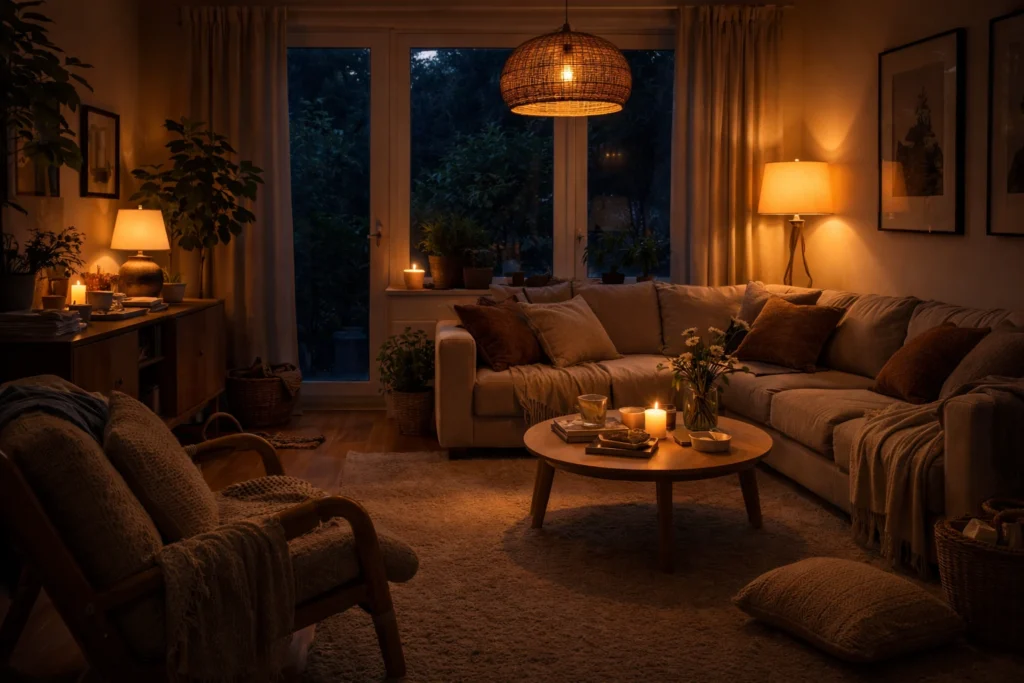
Studies show that 68.53% of people experience digital eye strain, with poor lighting as a major contributor. But the real damage happens when fixtures work against you.
Come, let’s see how lighting affects your mental state.
Warm Lighting Promotes Relaxation
Based on our practical knowledge, amber-toned bulbs tell your brain evening has arrived. This triggers your body to start producing melatonin naturally.
Dimmable warm lights work even better because you can gradually lower brightness as bedtime approaches. This creates that sanctuary feeling in bedrooms. Not only that, your nervous system finally shifts from alert mode to actual rest.
Natural Light Boosts Energy
Morning sunlight increases serotonin levels, which improves your mood and reduces seasonal affective disorder symptoms throughout winter. We suggest positioning desks near windows for natural light to keep yourself alert and boost productivity. Besides, window treatments that maximise daylight help regulate your internal clock.
Beyond lighting, the materials under your feet also play a surprisingly big role in how grounded you feel.
How Do Hardwood Floors Change Home Atmosphere?
Hardwood floors change the home’s atmosphere by softening sound, providing visual calm, and creating simple maintenance routines. Believe it or not, timber flooring creates acoustic warmth that tiles can’t provide.
The truth is that natural wood textures help anxious minds feel stable by absorbing sound. Consistent grain patterns ground you in the space. This beats staring at synthetic flooring that offers no sensory connection whatsoever.
Flooring handles the foundation, but adding soft textures throughout takes comfort to another level.
Texture Changes That Lift Your Spirits
What if the quickest mood boost in your home cost less than $50 and took five minutes? Surprisingly, it’s possible with simple texture changes.
Soft throw blankets provide instant comfort cues that tell your body it’s safe (most people underestimate this by a mile). Plus, natural fibre rugs engage multiple senses at once. Cotton, wool or jute underfoot feels completely different because they ground you physically while adding warmth.
Meanwhile, linen curtains work double duty. They soften harsh window light while adding gentle movement throughout the day. The fabric’s natural texture adds depth to walls without expensive renovations.
These small changes improve your personal comfort, but your home layout directly affects your relationships.
Home Layouts for Better Social Connections
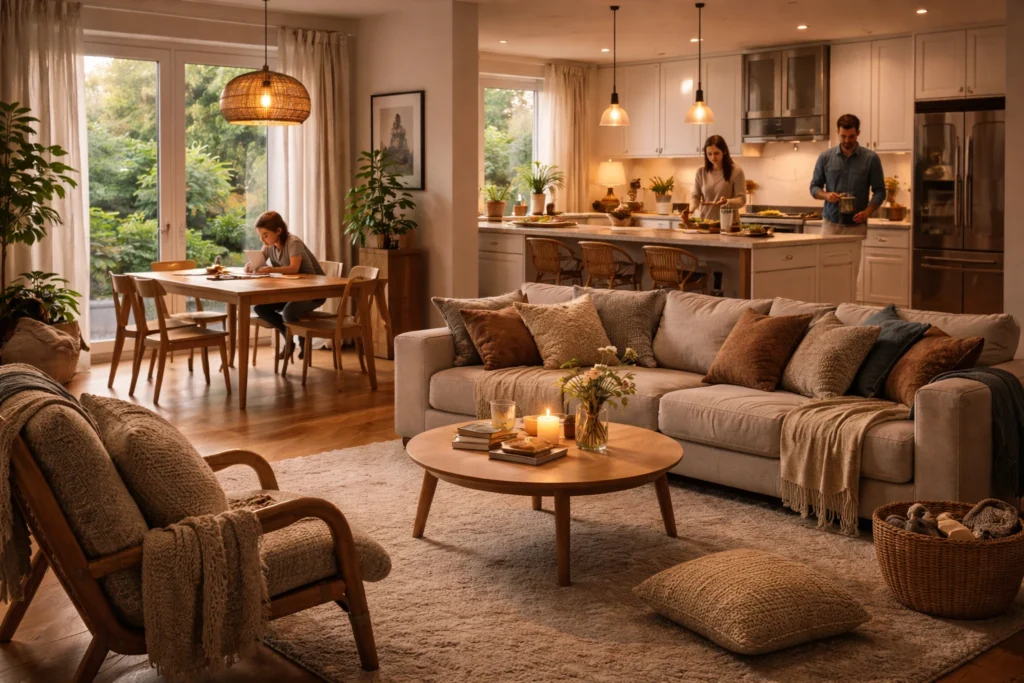
Open floor plans reduce isolation by keeping the family in visual contact during separate activities. It also encourages spontaneous conversations during social events.
Here’s how to set up areas that bring people together.
Conversation Areas Encourage Interaction
Arranging seating in facing positions creates eye contact opportunities that deepen connections. Dedicated chat corners with comfortable chairs show that conversations hold weight, which encourages family members to spend quality time together.
Removing television sets helps shift focus from screens to people, improving relationship quality.
Shared Spaces Build Relationships
Kitchen islands with seating bring people together during meal prep, changing cooking into collaborative family time. And that’s where the magic happens. Open shelving displaying personal items creates conversation starters.
Now, if you have multipurpose rooms to accommodate different activities, you have the perfect home environment. All these changes work together, but the real question is where to start.
Your Space, Your Mood
Your home environment directly impacts your mental health. Poor lighting drains your energy while cluttered storage creates constant overwhelm. Reality check: disconnected room layouts leave you feeling isolated. The solution? Simple and affordable changes can completely shift how you feel in your space.
We’ve covered natural materials that calm your senses, lighting that supports sleep cycles, and decluttering that creates mental breathing room. We also looked at room layouts that strengthen family connections and small texture changes that lift your spirits.
These changes don’t require expensive renovations. Our team at Run Away Squirrels helps you through every step you need to create homes that support your mental health instead of draining it. Start with one room today.