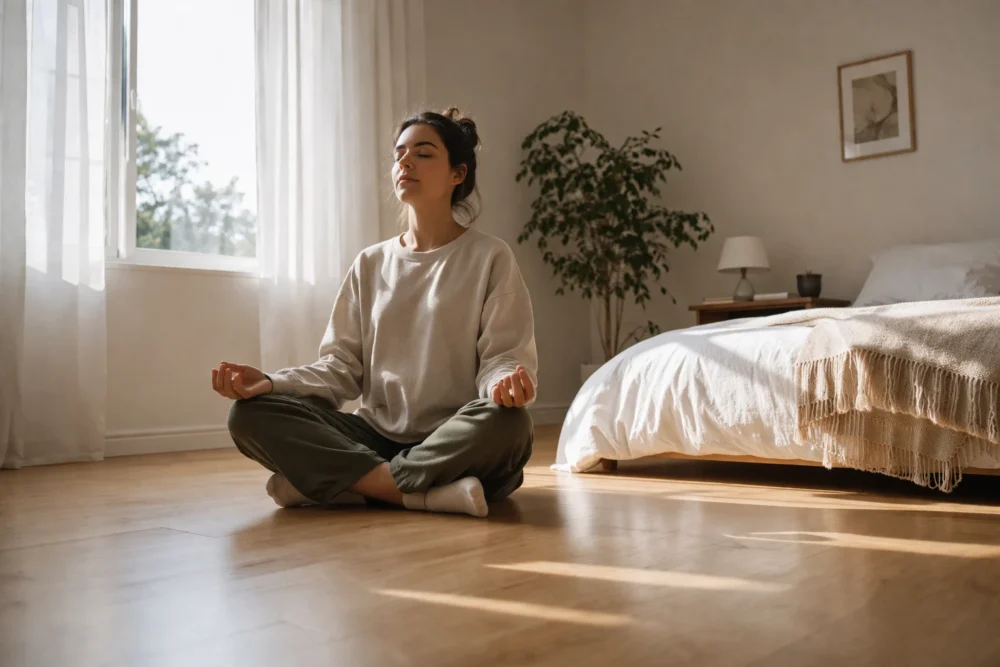
Your home environment affects your stress in small ways you rarely notice during the day. You walk past the same cluttered corner, sit under the same harsh overhead light, or hear the same rattling noise from the hallway without consciously registering any of it. But your nervous system notices.
These minor environmental details create background tension that builds throughout the day. And in calmer homes, that tension never has a chance to accumulate. Often, the difference comes down to lighting, visual clutter, or how sound moves through your rooms.
This guide covers which environmental factors affect stress most, how to identify problem areas in your home, and what simple adjustments create the biggest emotional shifts.
Let’s dive in.
Why Small Adjustments Make the Biggest Difference
Small changes work because your brain reacts to environmental cues faster than conscious thought. Even subtle details like visual clutter or the way you approach improving a room can influence how focused, calm, or overwhelmed you feel.
Let’s take a closer look at how your surroundings shape mental clarity and why it’s important.
Environment & Mental Clarity

Visual chaos forces your brain to process hundreds of competing objects. Every item on your desk, every pile in the corner, and every unfinished task in plain sight pulls at your attention, even before you notice it. Over time, that constant mental tug wears you down, and by evening, you may feel drained without even realising why.
Calm spaces reduce this hidden load. With fewer objects demanding focus, your brain can relax so you can think clearly and act without fatigue.
Clean surfaces reinforce the effect. They signal completion to your mind, while clutter implies unfinished business. That’s why walking into a tidy room often gives you a subtle sense of accomplishment. By contrast, messy spaces whisper that you’re falling behind (even if you’re not), completing the chain from visual input to mental clarity to emotional state.
Starting With One Room at a Time
Thinking about decluttering your entire house can feel overwhelming, so start with just one room. We recommend beginning with the smallest or easiest space so you can finish quickly and feel a sense of accomplishment.
That early win builds motivation and makes the next room easier to tackle. Once you see how much calmer a single space can feel, continuing with the rest of the house becomes a lot less intimidating.
Decluttering Strategies That Stick
Keeping your home clutter-free doesn’t have to mean exhausting weekend cleanup sessions. Instead, focus on small habits that prevent clutter from building up in the first place. Here are some simple strategies you can start using today:
- Flat Surfaces: Covered countertops make rooms feel cramped compared to clear ones. The same kitchen looks bigger when the benchtops are empty.
- Daily Resets: Five-minute tidying sessions prevent mess from piling up better than weekend marathons that never happen consistently (we’ve all been there).
- Designated Homes: Items without a set place migrate from room to room, creating visual noise that disrupts mental calm. In busy households, we often see things left on counters, chairs, or stairs simply because their proper spot hasn’t been decided.
- Storage Limits: Doubling up storage categories forces you to choose favourites instead of keeping everything equally. This means you only keep what you actually use and value.
- One-In, One-Out: Every time you buy something new, let something old go. That way, your wardrobe never grows beyond your storage space, and clutter doesn’t sneak back in.
With that foundation in place, you can start shaping how your home actually feels to live in.
Light and Colour: Simple Adjustments for Instant Calm
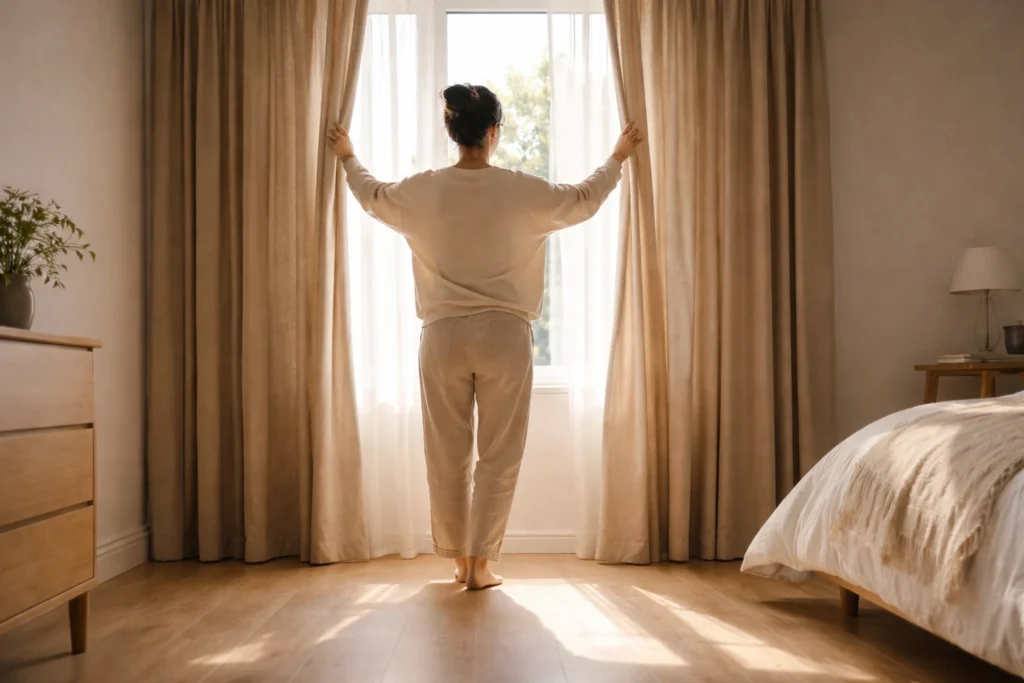
Have you noticed how certain rooms feel instantly calming while others make you restless? Light and colour are often the reason. Your brain reacts to these visual cues before you consciously notice them, which triggers stress or relaxation and influences how your nervous system responds in the space.
Fortunately, a few simple lighting and colour changes can make a room feel calmer almost instantly.
Natural Light Solutions for Every Room
According to a 2025 study published in BMC Public Health, greater morning sunlight exposure was linked to better circadian rhythm alignment and improved sleep timing.
But many rooms never get enough natural light because of heavy curtains or poor window placement. As a result, artificial lighting runs all day, which creates dimness, lowers energy, and makes spaces feel flat and uninviting.
One way to increase natural light without structural changes is strategic mirror placement. For instance, you can place a mirror opposite a window to bounce sunlight across the room. This instantly brightens the space and makes it feel larger and more inviting.
Choosing Paint Colours That Promote Relaxation
Cool colours like blues, soft greys, and muted greens create a relaxing atmosphere. They make spaces feel lighter, more open, and less visually stimulating than warm yellows or reds.
Not all wall colours have the same effect, though. For example, bright white walls reflect light strongly, which can make a space feel stark, harsh, or distracting, especially in rooms with a lot of natural light. In such cases, softer neutrals, like warm beige or pale sage, can reduce that intensity and create a calmer backdrop.
Once you’ve chosen a calm base colour, you can refine how the eye moves through the room with accent walls. Restful accent colours guide focus to one area, so your attention doesn’t keep shifting around the room.
Together, cool tones, soft neutrals, and mindful accents create a space that supports calm and mental clarity.
What Makes a Home Feel Quiet and Restful?
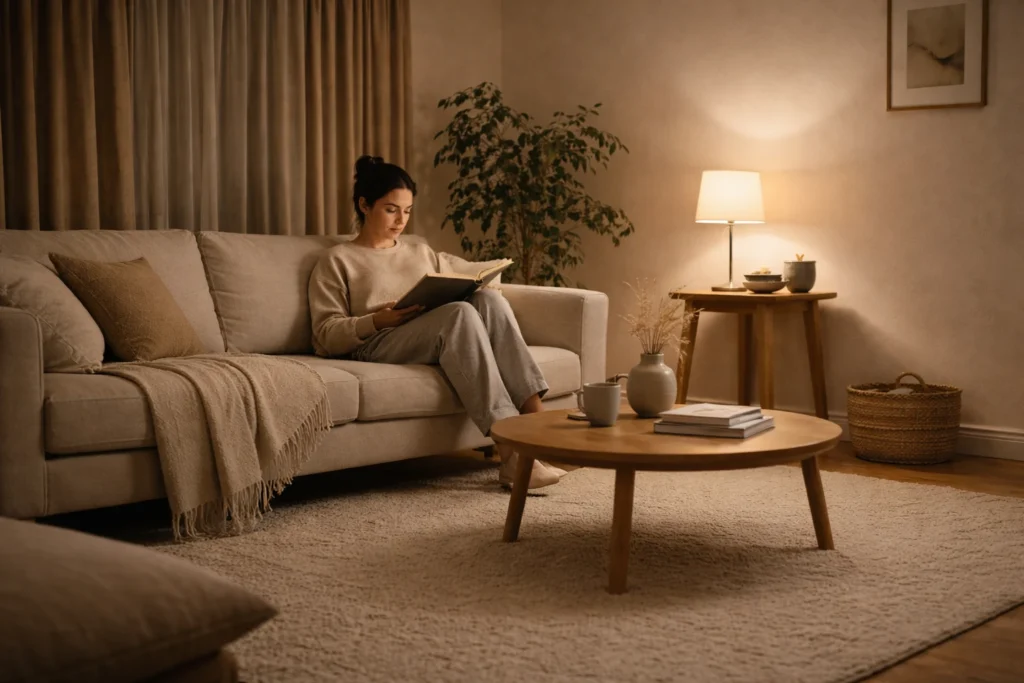
Quiet homes feel calm because sound is softened instead of bouncing around. They use soft materials like rugs and curtains that absorb sound and reduce echoes. Without them, hard surfaces like timber floors and bare walls reflect noise to make everyday sounds feel sharper and louder than they need to be.
Layout also affects how sound travels. Open spaces let noise spread freely, while rooms with doors help contain it. That’s why kitchen or appliance sounds carry more easily in open-plan homes.
Even small background sounds can add up. Reducing constant noise from electronics or appliances helps your space feel quieter and easier to relax in.
Creating Your Personal Sanctuary
You don’t need to renovate your whole house to notice a difference. Even simple tasks, like clearing a countertop or organising a nightstand, can make your space feel calmer and your mind clearer.
Start with one room this weekend and see how your energy changes by Monday. Focus first on the space you wake up in, since the way you feel in the morning sets the tone for the rest of your day.
For more ideas on creating a calm home, visit Run Away Squirrels. We help homeowners create calm, organised spaces that support focus and relaxation.