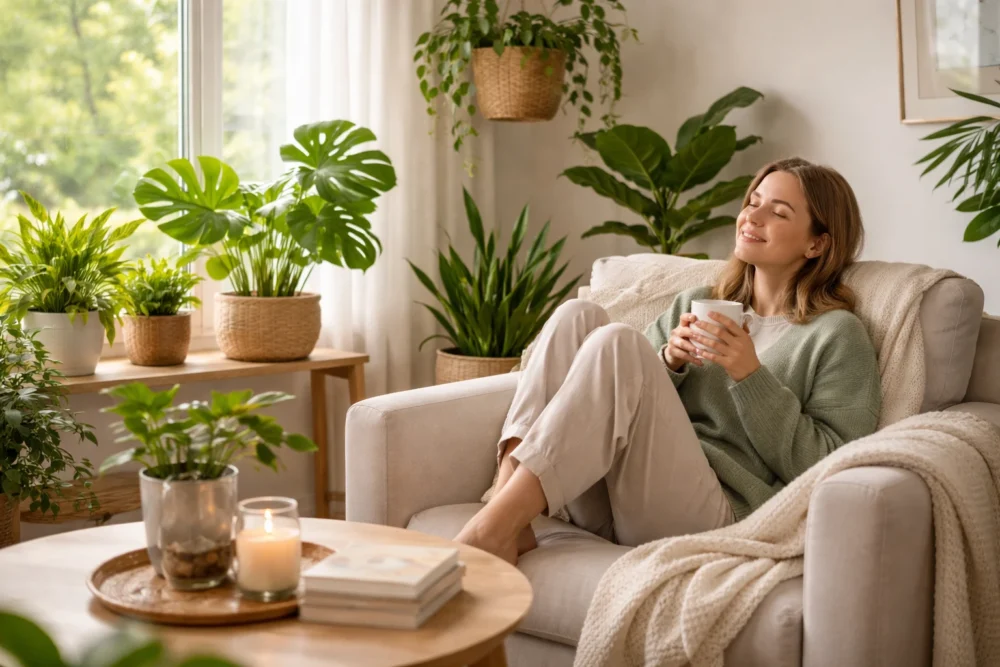
A study from the University of Technology Sydney found that adding just one plant per workspace dropped anxiety levels by 37%. The researchers were tracking how people’s bodies responded to having something alive and green nearby.
Your home affects how you feel every day, whether you notice it or not. When you walk into a room with grey walls and fluorescent lighting, and then walk into one with a few plants and natural wood, you can immediately feel the difference.
In this article, we’ll discuss what makes indoor nature work the way it does. You’ll learn how plants change the air and your mood, how kids benefit from nature play inside the house, and which materials make spaces feel calmer instead of just looking trendy.
Let’s start with what happens when you bring greens through your front door.
What Happens When You Add Plants to Your Living Space?
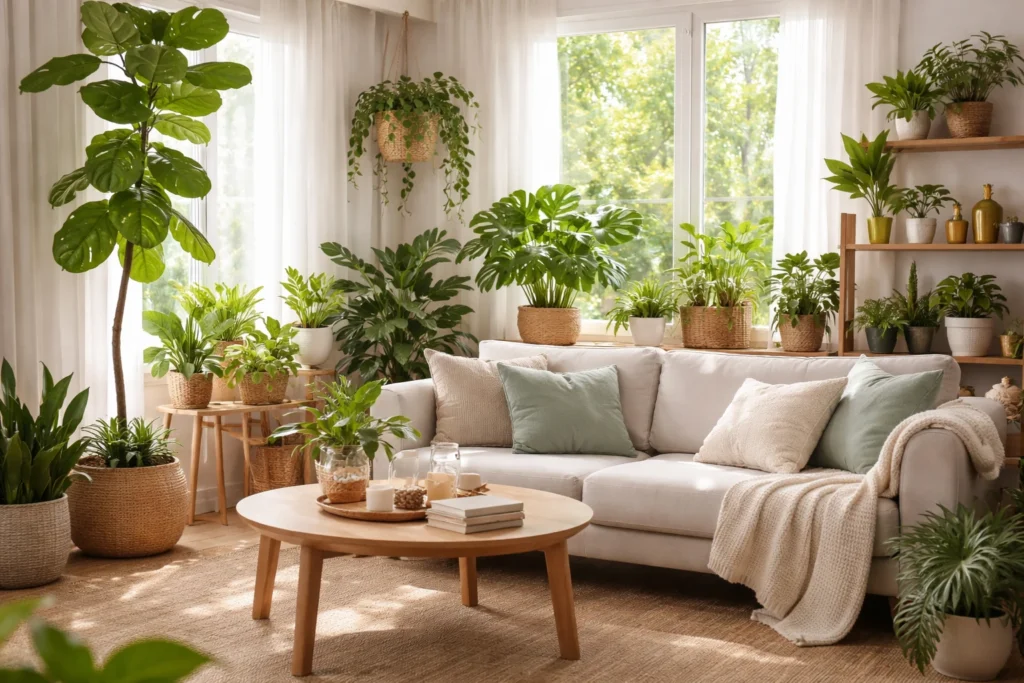
Plants change your home atmosphere by improving air quality, dropping stress levels and making rooms feel more alive. Sounds too good? But it’s true that the moment you add greens to a room, your body responds positively.
Here are some of the changes you’ll notice when you add plants to your decor:
- Better Oxygen Flow: Indoor plants flow more oxygen into your home while pulling out carbon dioxide. Your body benefits from the better air quality, even if it’s just one potted fern on a shelf.
- Calming Effect: Rooms with greenery lower stress hormones within minutes. When you walk into a house with a few plants scattered here and there, the whole feeling changes. On top of that, kids have fewer meltdowns when they’re around nature.
- Improved Focus: Being around plants helps your brain slow down and refocus. That’s why rooms with plants often feel easier to work, study, or relax in. They quietly support your mental clarity without demanding attention.
A study even showed that hospital patients who had a view of nature recovered faster than those staring at brick walls. So, the difference isn’t as subtle once you try it. When you add even one plant to the main living area, you’ll notice the change within days.
Natural Design: Using What’s Already Outside
Now, before you overthink this, natural design just means swapping out synthetic items for organic materials like wood, stone, and plants. That’s it.
With natural design, you don’t have to buy expensive décor. Instead, you can use materials that already exist around you.
This approach is effective in any home size because you’re not going the whole nine yards with renovations or speciality items. Rather, you’re bringing in what’s available in your area. It could be a wooden bowl instead of a plastic one, or a stone vase instead of a ceramic.
These small swaps don’t cost a lot but create a completely different feel in your space. In fact, most people notice their space feels calmer once they make even two or three of these subtle changes.
Can You Bring Nature Play Indoors?
What if your kids could explore nature without turning your lounge room into a campsite? When the weather’s bad or you’re stuck indoors, bringing nature play inside gives children the same benefits as outdoor exploration.
The idea here is simple. You’re creating ways for kids to interact with natural materials and discover how the world works (just from a different spot). It keeps them engaged, builds creativity and gives them something to do that doesn’t involve a screen.
Take a look at how you can make nature part of your home.
Window Watching: Engaging Kids in Outdoor Activities
You can set up a spot near a window for cloudspotting, birdwatching or tracking moon phases (especially during those endless winter months).
Kids can keep nature notebooks to draw what they see from that spot without leaving the house. They can also enjoy scenes of birds landing on the fence, clouds moving across the sky, and trees swaying in the wind. For their curious minds, all of it becomes something to watch and learn from.
Along with that, binoculars and simple field guides make window watching more interesting for the whole family.
Making Sensory Bins With Outdoor Materials
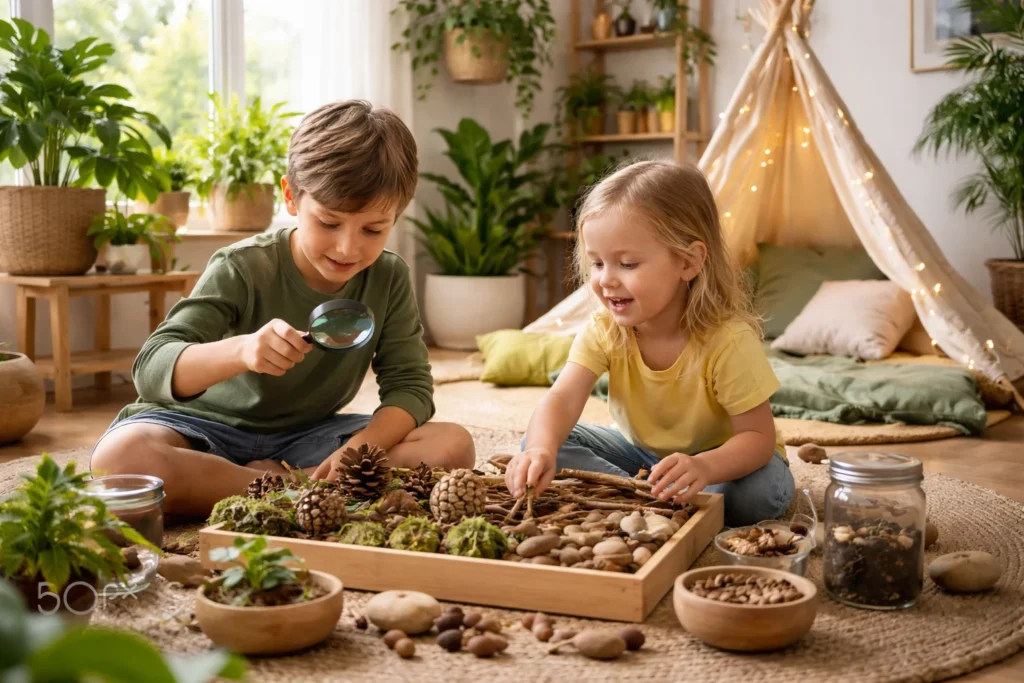
Collecting pinecones, leaves, smooth stones, and twigs can be an efficient way to create sensory bins for tactile play. After testing this with kids of different ages, we found that sensory bins calm them down and give them something to explore during indoor days without any fancy setup.
Plus, you can swap out materials seasonally, so the bins stay fresh and interesting. To give you an idea, autumn leaves in October, pinecones in winter, smooth river stones in spring. With these, kids get to touch, sort and play with nature without mud tracking through the house.
Connecting with Nature Through the Local Library
Many libraries run free nature programs teaching kids about local plants, animals and weather patterns. Library staff are often happy to recommend field guides, nature activity books, and gardening resources suitable for all ages.
Some libraries even lend out nature exploration kits with magnifying glasses and specimen containers, which saves you from buying equipment you’ll only use a few times.
Now that you know how to bring nature indoors, let’s see what it does to your mood day-to-day in detail.
How Indoor Nature Affects Your Everyday Mood
Indoor nature changes how you feel when you wake up, work from home or wind down in the evening. The connection between what’s in your space and how you feel is intensely connected. It even affects how well you sleep and how patient you are with your kids after a long day.
Here’s the psychology behind it.
Why Neutral Tones Make Greenery Stand Out More
Neutral tones work better with natural elements because they don’t compete for attention. Some of the best combinations are beige, grey and white, because they let the wood grain or greenery get the focus without making the room feel busy.
Our experiments with various colour schemes showed that neutral spaces don’t overwhelm your eyes, and the greenery adds colour in just the right amount. It’s because this concept copies what you see outdoors, where earth colours and green already sit together.
Lighting is important here, too. Bright natural light with neutral walls and a few plants creates a room that feels open and spacious. Just from lighting, the whole setup reflects how nature actually looks without trying too hard.
The Difference Between Fake Plants and Real Ones
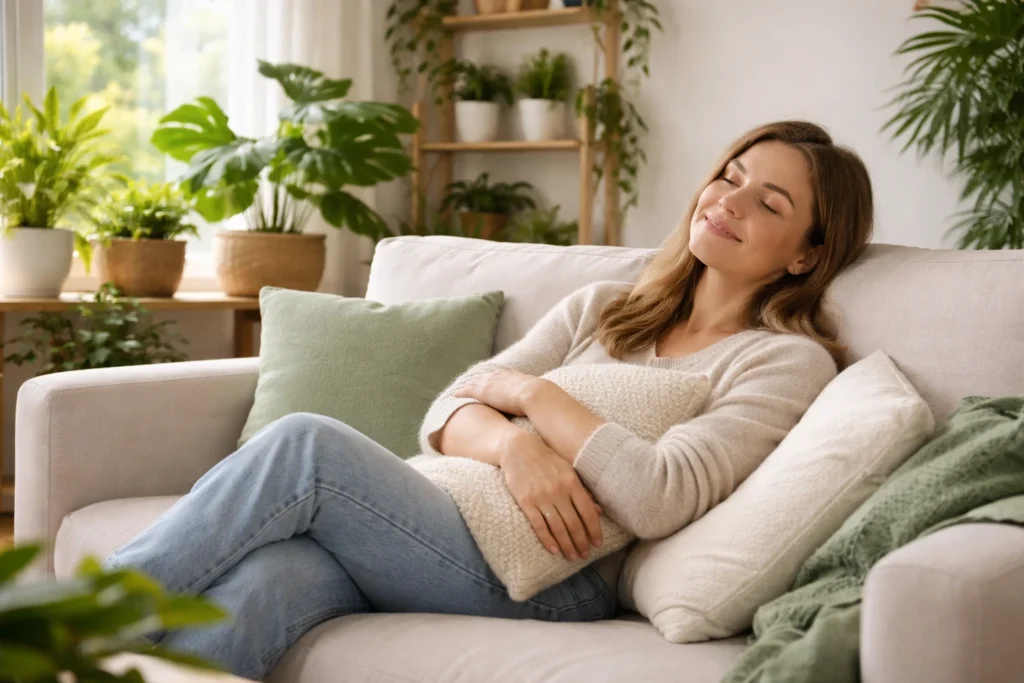
Real plants improve the air quality and require regular care. That helps you build a routine connection with a living thing in your home. On the other hand, fake plants don’t offer the same mood improvement because there’s no living element present (and often just gather dust without cleaning anything out).
Take a look at this comparison table between fake plants and real plants, and you’ll understand without any explanation:
| Aspect | Real Plants | Fake Plants |
| Air Quality | Improves air quality | No effect |
| Care & Maintenance | Need watering and care | No care, but collects dust |
| Emotional Impact | Boost mood with living presence | Less mood benefit |
| Connection | Create a living connection | No connection |
| Appearance | Grow and change over time | Can get dusty and worn out |
People report feeling more satisfied with spaces that have real greenery versus artificial versions. It’s because the presence of something alive gives off a different feeling, even if you can’t explain exactly why.
The Easiest Way to Feel Different at Home
Indoor nature changes how you feel at home because it taps into something we’re wired to respond to: nature. When you add plants to your decor, it improves air quality. Plus, the natural design creates calm spaces and gives kids a way to connect with the outdoors year-round without leaving the house.
For that, you don’t need to turn your home into a greenhouse or spend hundreds on new furniture additions. One or two plants in the rooms where you spend the most time is more than enough. Then watch what happens over the next week or two.
And if you need more ideas on creating spaces that feel good to live in, check out Run Away Squirrels. We have all the insights you need to make your home feel healthier and more convenient.